The Client
The Army & Air Force Exchange Service (the Exchange) serves active-duty military members and their families on bases worldwide. The Exchange operates as a full-service department store, grocery outlet, and specialty shop all in one.
Across two phases, my team redesigned the entire Exchange ecommerce storefront, including their unique Uniform Builder – a critical tool that helps service members procure regulation-compliant uniforms.
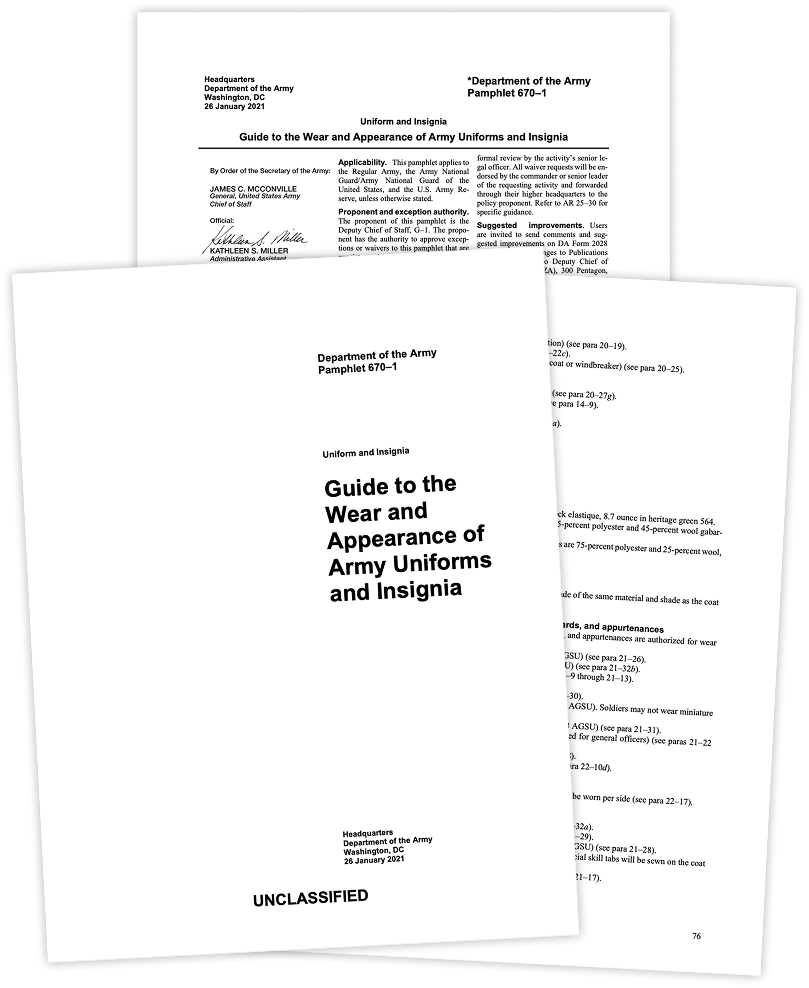
A sample of the Army uniform regulations – a few of hundreds of pages reviewed to inform the Uniform Builder's design
The Challenge
This project kicked off with an unusually tight timeline, given the large scope of work. To accommodate this, I was responsible for quickly recruiting and onboarding a large team of contractors to assist our in-house team of designers.
That scope included replacing a full ecommerce storefront with a responsive, mobile-first design. In addition to the more traditional commerce elements on this site, the Uniform Builder presented its own unique challenge. The existing Builder was woefully difficult to use, filled with endless dropdowns containing literally hundreds of options. Given that military uniform regulations are exceptionally strict (every patch, insignia, and pin has a specific position on the uniform), our design needed account for those guidelines in addition to dramatically improve ease of use.
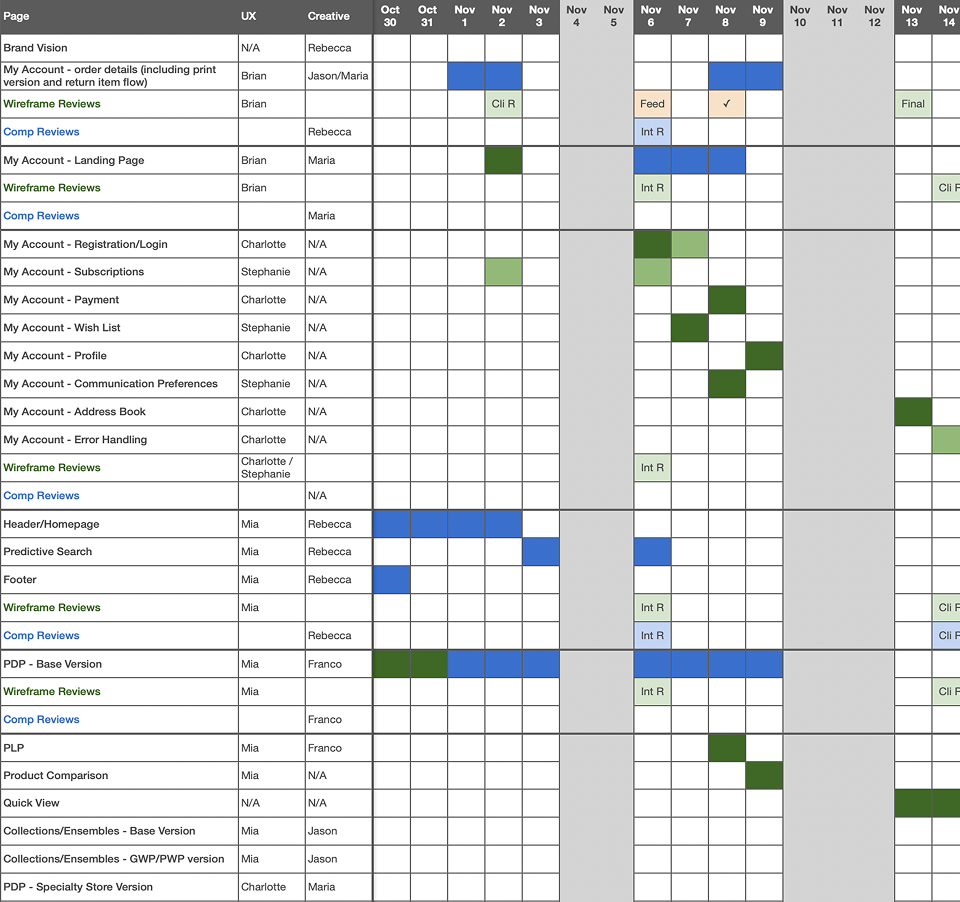
A sample of the project plan I built to track milestones, team assignments, and deliverables
The Process
Discovery and Onboarding
Before designing, I led a four-week discovery phase with the client to scope the full project. That process produced detailed estimates for every major deliverable — the storefront redesign, the Uniform Builder, functional documentation, and client presentations. From those estimates, I built a project plan that mapped each workstream to specific team members and milestones.
To hit our aggressive timeline, I assembled a team of ten — the majority of them contractors brought on specifically for this engagement. In just two weeks I recruited, interviewed, and onboarded the full team.
Research
Following discovery and on-boarding, the research phase included a focus group with active-duty service members aimed at understanding uniform purchasing habits and pain points. We followed up with an interview of an Army Major, further discussing uniform purchasing needs and how those needs may differ from other service members. Additionally, we thoroughly reviewed uniform regulations – hundreds of pages of military code – to inform the Uniform Builder's logic. Predictably, military regs are very strict, and given the vast number of patch and insignia options, the tool proved quite complex.
Design
With research findings in hand, I led the team through low-fidelity wireframing. We paired wireframes with extensive functional documentation – business-analyst-style specs that described every state, interaction, and edge case. This reduced ambiguity during development and became a living reference throughout the project.
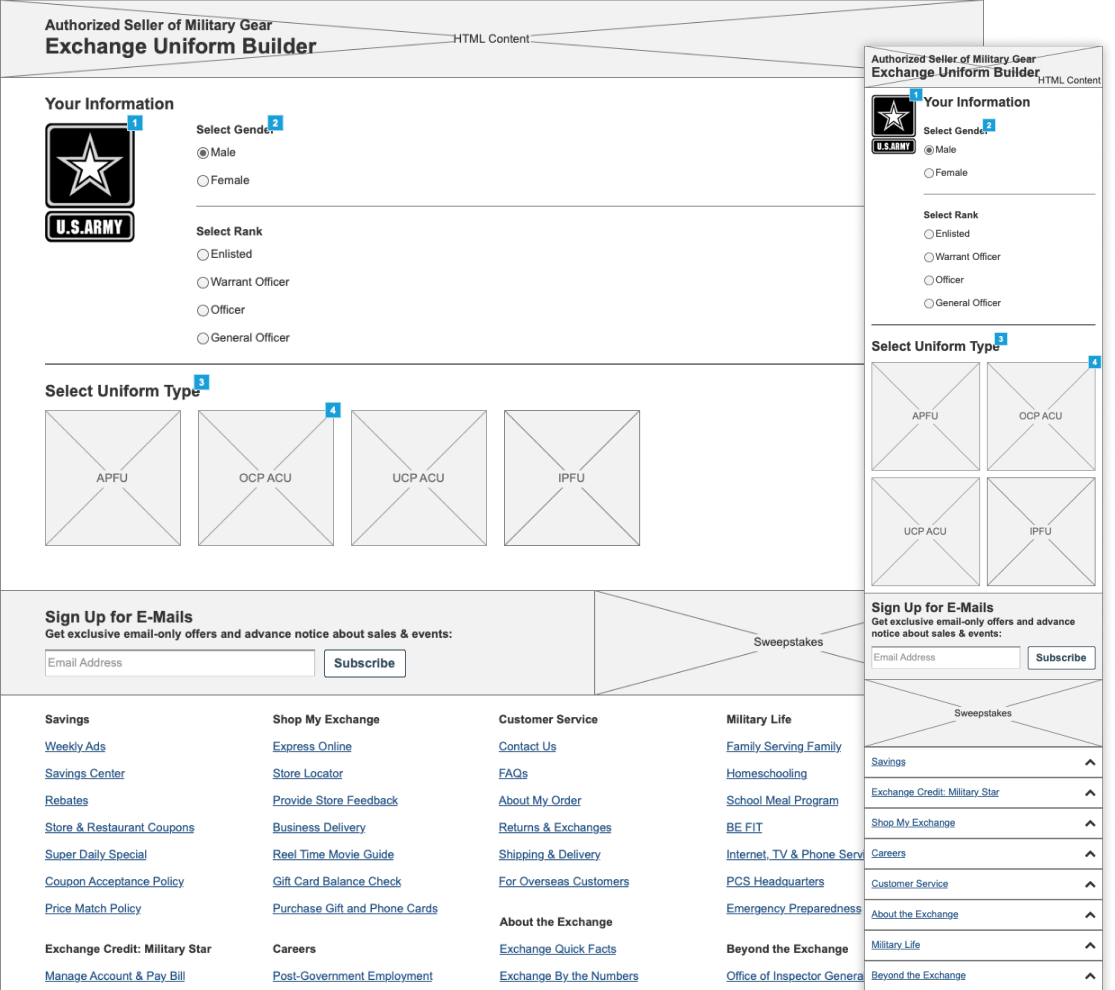
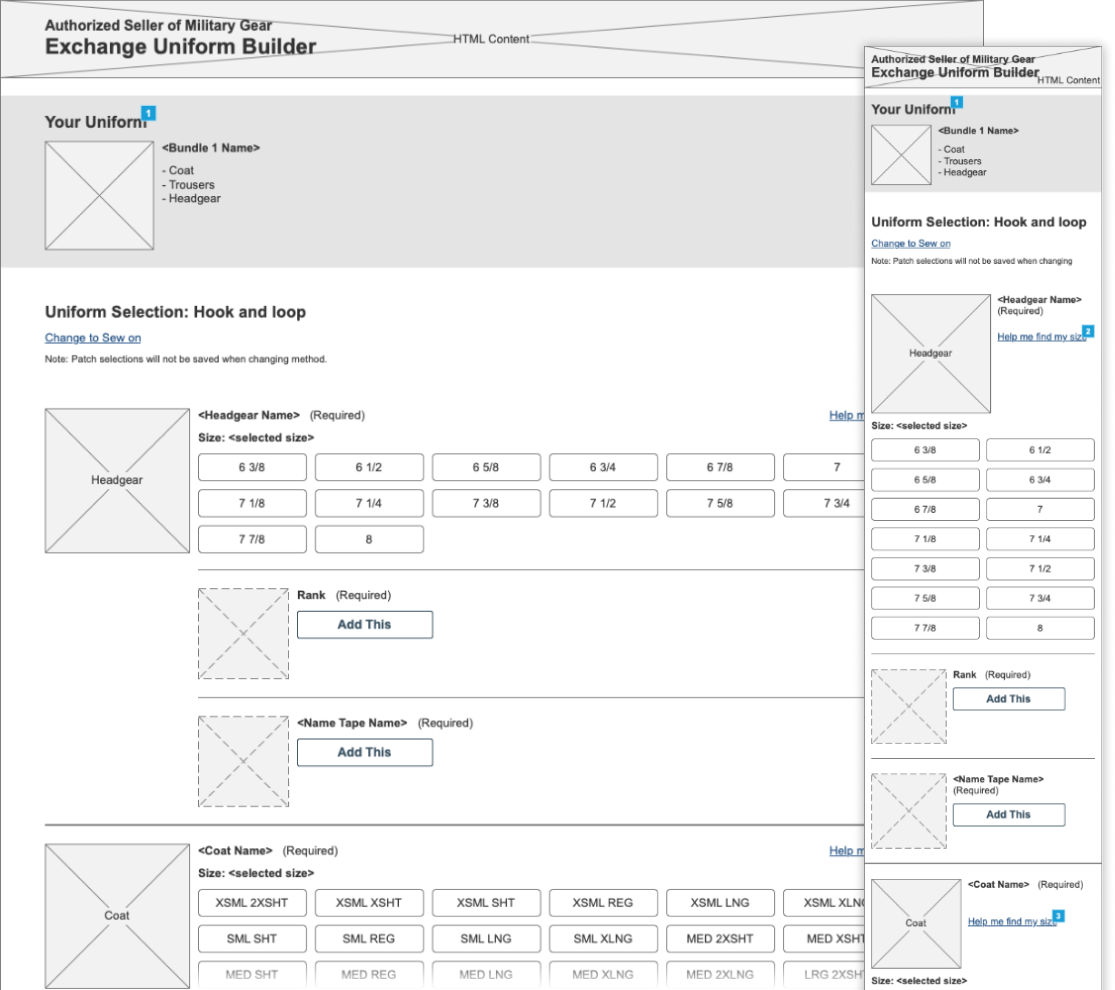
Wireframe for the Uniform Builder landing page, the entry point for service members configuring their uniforms
Wireframe for the item selection screen, paired with functional documentation describing every interaction state
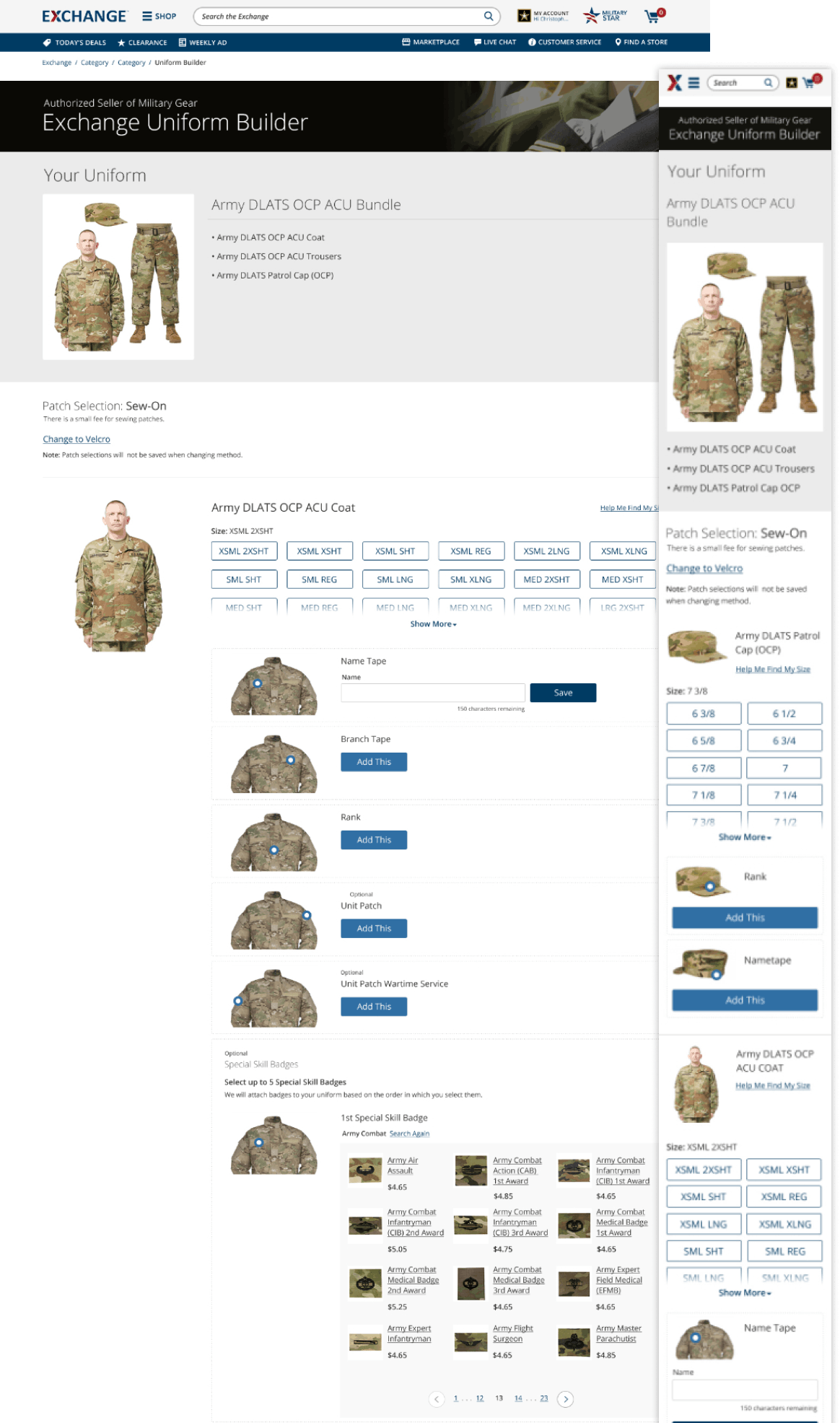
From wireframes, we moved to high-fidelity design. The customer was very pleased with the visual direction, noting that the look-and-feel matched their brand identity perfectly.
All of this work was presented, first internally and then with the client, in batches. Dividing the work up like this allowed us to feed designs to development quickly.
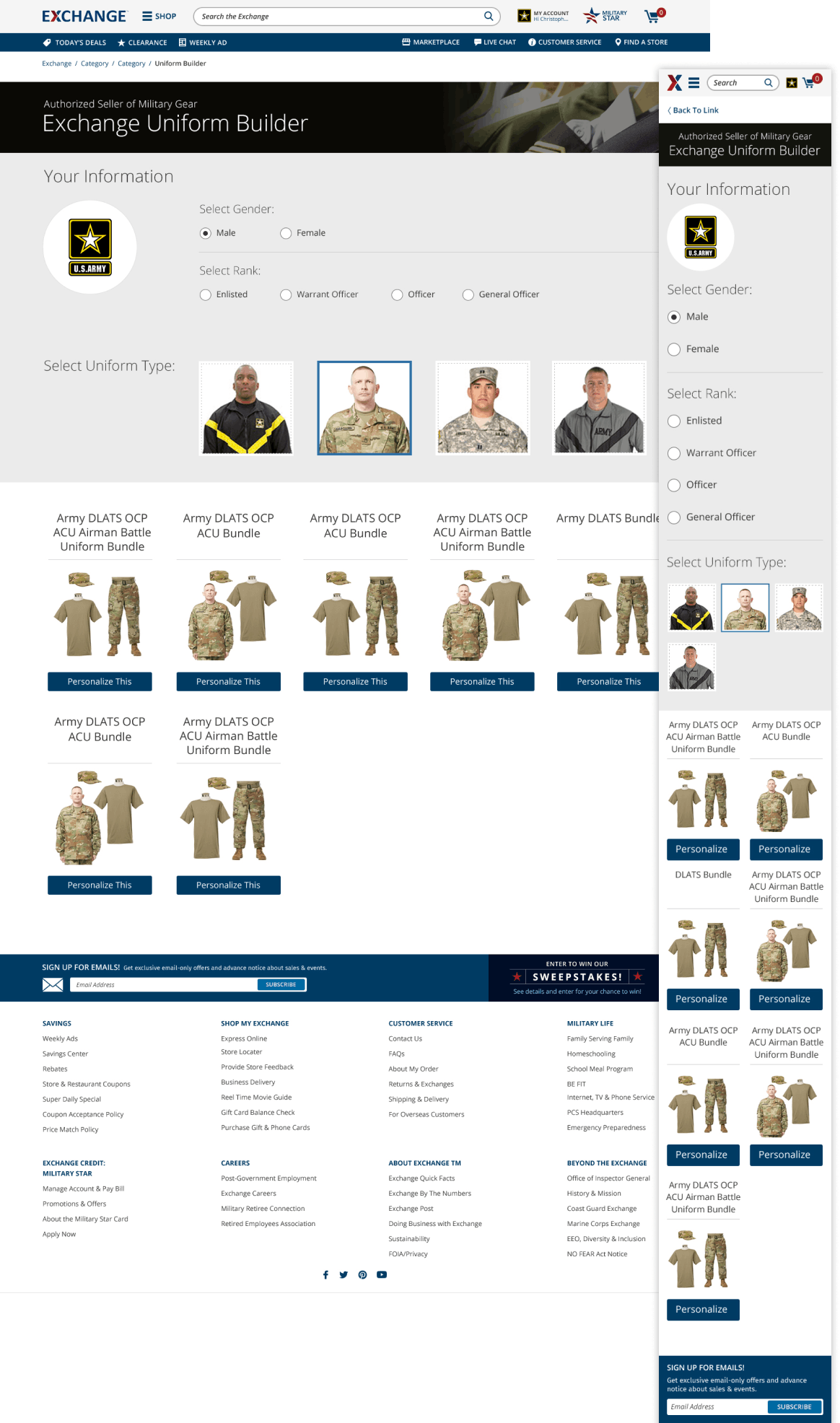
High-fidelity Uniform Builder landing page – the entry point service members use to begin configuring their uniforms
High-fidelity Uniform Builder selection screen – service members can see exactly where each item belongs on their uniform
The Outcome
The project launched on time and on budget – a meaningful accomplishment given the scope and the team dynamics I had to navigate. The redesigned checkout flow delivered an 11% conversion increase, a result that had direct revenue impact for the Exchange.
The Uniform Builder was likewise praised for its clarity and usability.
I was impressed with how Brian juggled so many moving parts successfully.
– Design Contractor, AAFES Project
Lessons Learned
The team size on this project was large by design – we inflated it to meet an aggressive timeline. In retrospect, that tradeoff presented notable challenges. A larger team meant rapid onboarding, more management overhead, and less consistent design quality. Two contractor placements didn't work out – I had to remove one altogether and shift another to less demanding tasks, which added stress during the a critical phase of the project.
While this taught me that I can lead a large team when the situation demands it, the better approach is to push back on timelines early and work with a team sized appropriately for the project. This project came together with great success, but this overloaded approach could be a liability on future engagements.