Password Required
Need access? Get in touch.
The Client

The Pennsylvania Liquor Control Board controls all wine and liquor sales to bars, restaurants, and grocery stores across the state of Pennsylvania. Licensees replenish stock through the Licensee Online Ordering Portal (LOOP).
PLCB was re-platforming LOOP onto Oracle Commerce Cloud. As part of that migration, they wanted to modernize the experience, which hadn't been meaningfully redesigned in years and wasn't available on mobile at all.
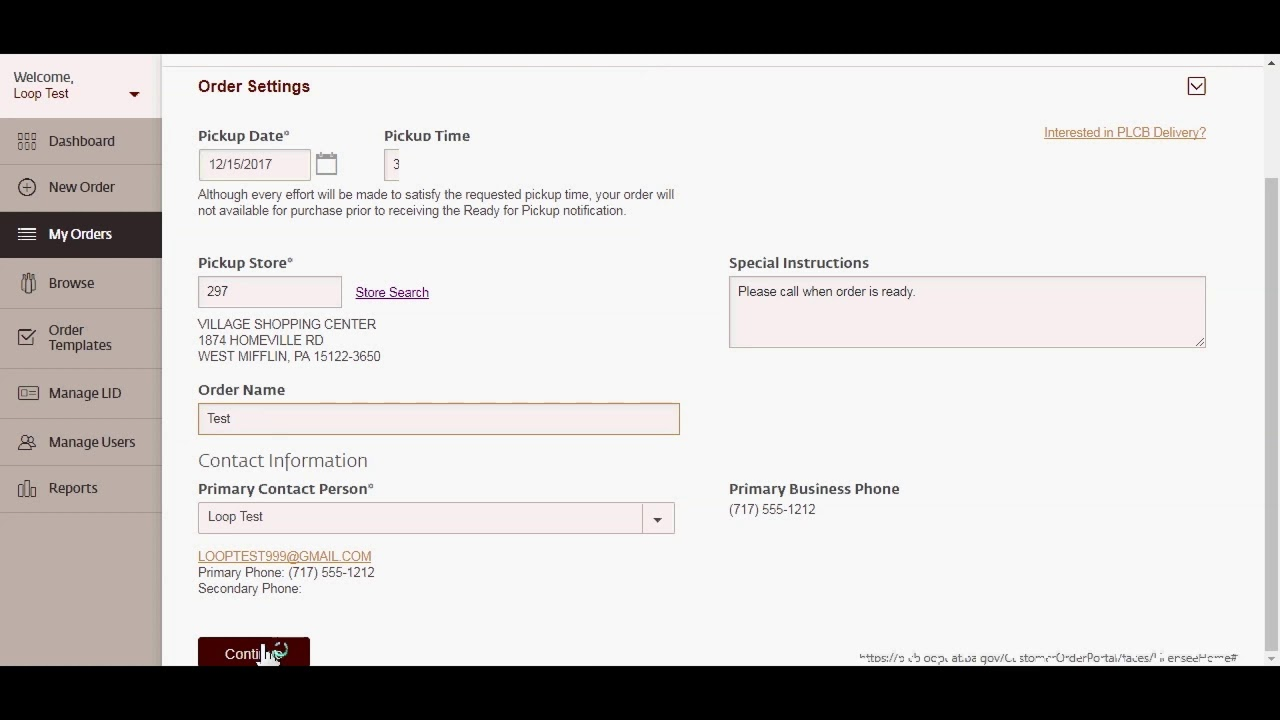
The original LOOP — a desktop-only, form-heavy system that required memorizing item codes to place an order.
The Challenge
For licensees, LOOP is a business-critical operations platform used to manage complex ordering scenarios: in-store pickup, delivery, and "trailer drop" (where a licensee drives a trailer to a PLCB distribution center and leaves it to be filled with their order). Each of these scenarios had its own workflow and rules, which needed to be accounted for in a new, mobile-friendly design.
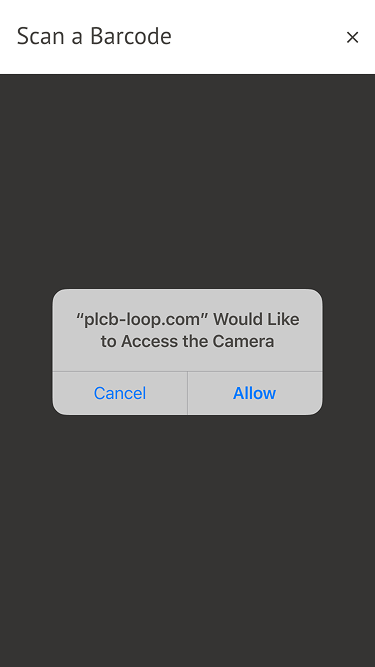
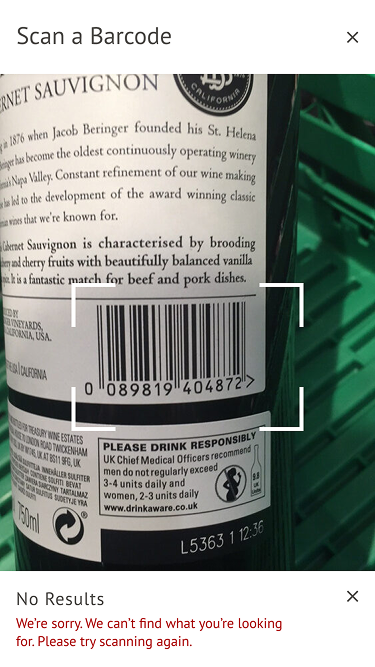
The scan prompt — licensees can look up any product instantly without knowing the item code.
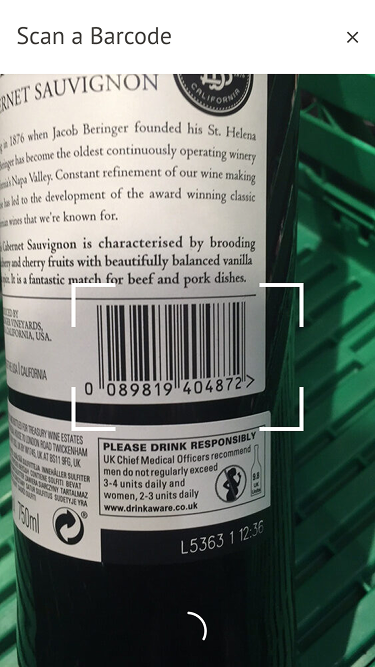
Scanner active — the device camera opens directly within LOOP for a seamless, app-like experience.
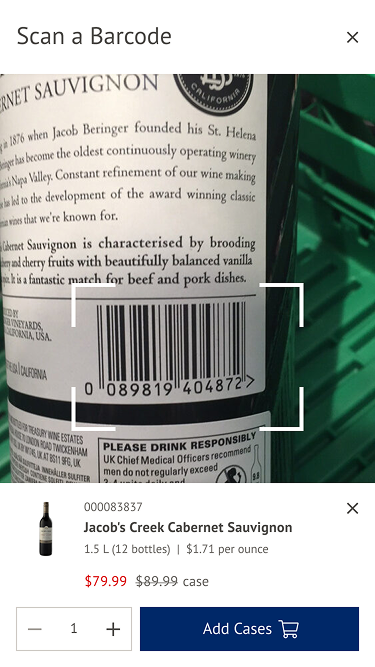
Successful scan — the matched product surfaces immediately with a single tap to add to the order.
Unrecognized barcode — a clear error state guides the licensee to try again or search manually.
The Process
Before designing, I led a research phase interviewing licensees about their ordering habits.
A key insight from this research was the need for far greater flexibility when ordering. Licensees needed to be able to order from behind the bar while overseeing a shift – not from a desktop computer tucked into the corner of a back office, which was the only option with the old LOOP system. They needed to be able to easily re-order large quantities of stock in bulk. And they needed to be able to assemble orders quickly.
The old LOOP was not available on mobile and purchasing was a slow process, dotted with countless form fields that leaned on memorizing item codes to complete an order.
To solve these problems, we redesigned the LOOP homepage as a dashboard with quick access to bulk ordering and delivery tracking. Licensees can check the status of recent orders, approve orders submitted by subordinates, track upcoming shipments, and access purchase lists for repeat ordering – all in a few taps. We added mobile-friendly features like barcode scanning for product lookup, which brought an app-like efficiency to the system.
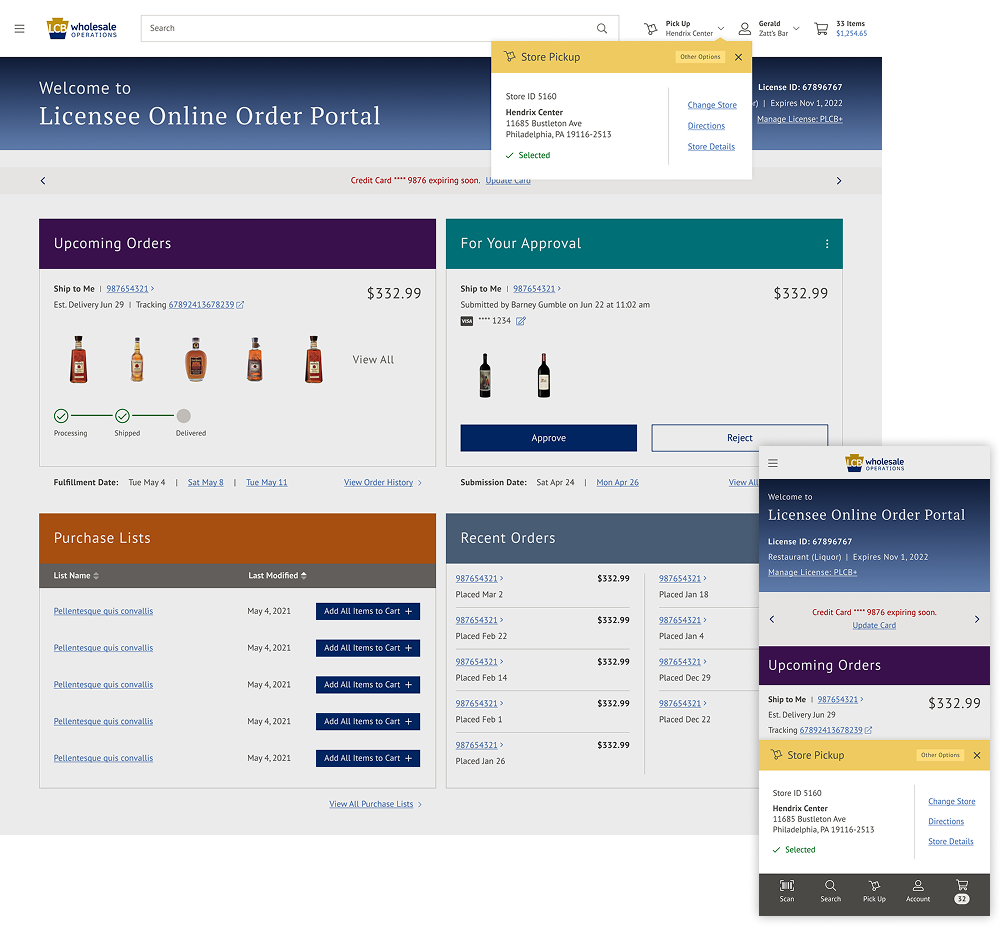
The redesigned LOOP dashboard on desktop and mobile — built for licensees who need to order on the go.
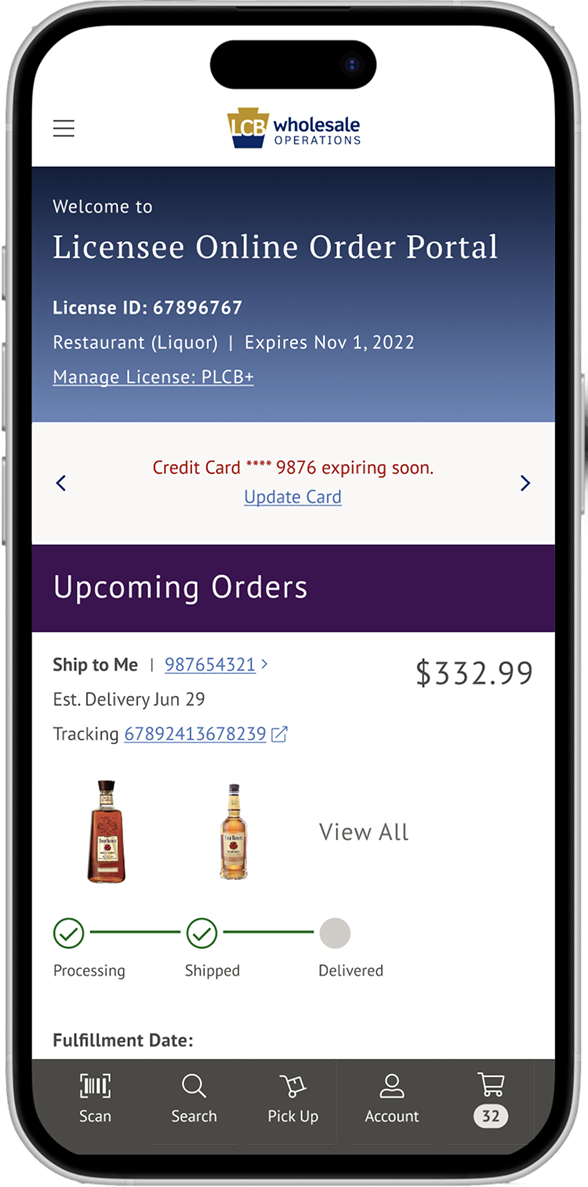
LOOP on mobile with the native app-like toolbar — unlocking advanced features like barcode scanning directly from the device's camera.
The Outcome
LOOP launched as a modern, mobile-first B2B commerce platform with support for all three fulfillment modes. For the first time, licensees could place and manage their orders from their phones, standing behind the bar. The new design allowed rapid repeat ordering from pre-built purchase lists or from past orders, neither of which were possible in the old LOOP system.
The client relationship remained strong post-launch. PLCB contracted us for follow-up design work, including a major update to their Associate Portal (detailed in the next case study), which is among the strongest validations a client can offer.
What I Learned
This was my first time leading a B2B commerce implementation. The business requirements for features like trailer drop are not found in a typical consumer-facing commerce experience. I was glad to be able to rely on the research phase to gain a deeper understanding of what this experience needed to deliver. Drawing on this kind of UX methodology is even more important when the industry or domain is a little unfamiliar.